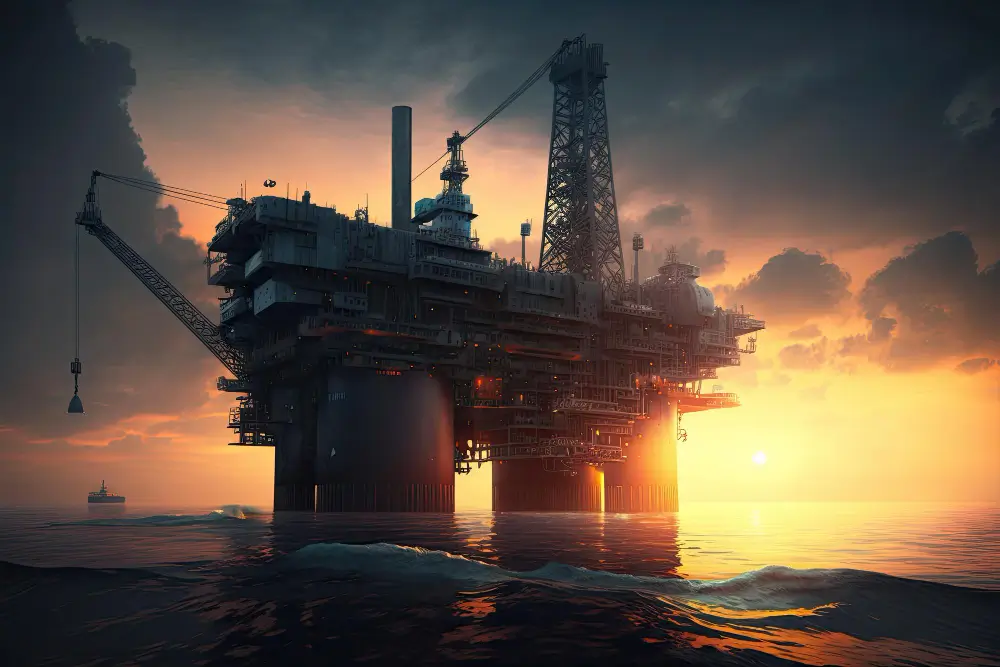
A blowout does not stay contained to the wellhead. Regaining control can take days or weeks, during which relief well drilling, specialist intervention teams, and lost production stack up fast, often well before any pollution or third-party claim even enters the picture. Standard property placements were not built to absorb this, which is exactly why Control of Well exists as a distinct line, and why Operators Extra Expense matters just as much as the physical damage cover sitting next to it.
Well control and re-drilling costs, extended lost production, and third-party claims that frequently exceed the value of the asset itself.
The US refining industry recorded roughly nine publicly reported fires and explosions in 2025 alone, several traced back to mechanical failure and gaps in process safety management rather than anything more exotic. Ageing infrastructure and tightening maintenance windows only add to this. Property Damage and Business Interruption cover need to be sized around realistic downtime, not the optimistic assumptions built into a turnaround schedule.
Extended unit shutdowns, regulatory penalties, and business interruption losses that often outlast the physical repair itself.
Close to a fifth of global oil and LNG supply moves through the Strait of Hormuz alone, and a single regional escalation can move Brent by several dollars a barrel within days while rerouting tankers mid-voyage. Cargo in transit, chartered vessels, and port infrastructure all carry exposure that sits outside a standard property or liability placement. Marine Cargo cover, alongside contractual protections built for chartering and offtake arrangements, is what actually responds when a shipment gets caught in the middle of a geopolitical event rather than a storm.
Cargo loss, demurrage costs, and offtake agreements disrupted faster than budget cycles can absorb.
Ransomware attacks against oil and gas companies rose by roughly 935% between April 2024 and April 2025, according to Zscaler's tracking of leak-site activity, much of it tied to how automated and interconnected industrial control systems have become. Security researchers now count 26 distinct threat groups actively targeting operational technology worldwide. Systems once isolated by design are now bridged to corporate IT, and Cyber cover has to extend to the operational technology side of that bridge, not just the corporate network sitting on top of it.
Operational shutdowns, safety system compromise, and recovery costs that extend well past the initial breach.
A spill rarely stays contained to cleanup costs alone. The Deepwater Horizon incident remains the reference point at over $60 billion in cleanup and restoration, and even routine spills can run past $150 a gallon to clean up in sensitive environments. Capital projects carry a parallel exposure of their own: new-build refineries, pipeline expansions, and turnarounds involve contractors, subcontractors, and equipment that Contractors' Plant & Equipment and Construction All Risks are specifically built to cover, separate from the ongoing operational placement sitting alongside them.
Natural resource damage claims, multi-year litigation, and capital project delays that ripple into missed production targets.

Better risk decisions create stronger resilient businesses
Our leadership team combines decades of energy risk, marine, and construction insurance experience drawn directly from the petroleum sector, across upstream, midstream, and downstream operations alike. They lead our mission to help petroleum enterprises harden their operational posture, protect capital assets, and support sustainable growth.
Our leaders are dedicated to strategic innovation in energy risk, equipping operational and executive teams to work through complexity and translate physical, geopolitical, and cyber exposure into insurable, manageable risk.
Predictable delivery rests on rigorous risk architecture. The most effective risk-transfer strategy is one that actively shields corporate equity and asset integrity long before a loss event ever occurs.
Contact our team today to learn how we can help your business make better risk and people decisions.
Contact Us